
Some Strawberry Space

Welcome to Pocketful of Prose, a community for sharing stories. Links are in bold, and there’s an audio of this pocket if that works better for your life. Pocketful of Prose is free for everyone so please share with friends. If you want to further support my work, you can do so by becoming a paid subscriber. If you like it here, please click the heart at the bottom, and make sure you are signed into Substack when you do so.
Without further ado, today’s pocket.
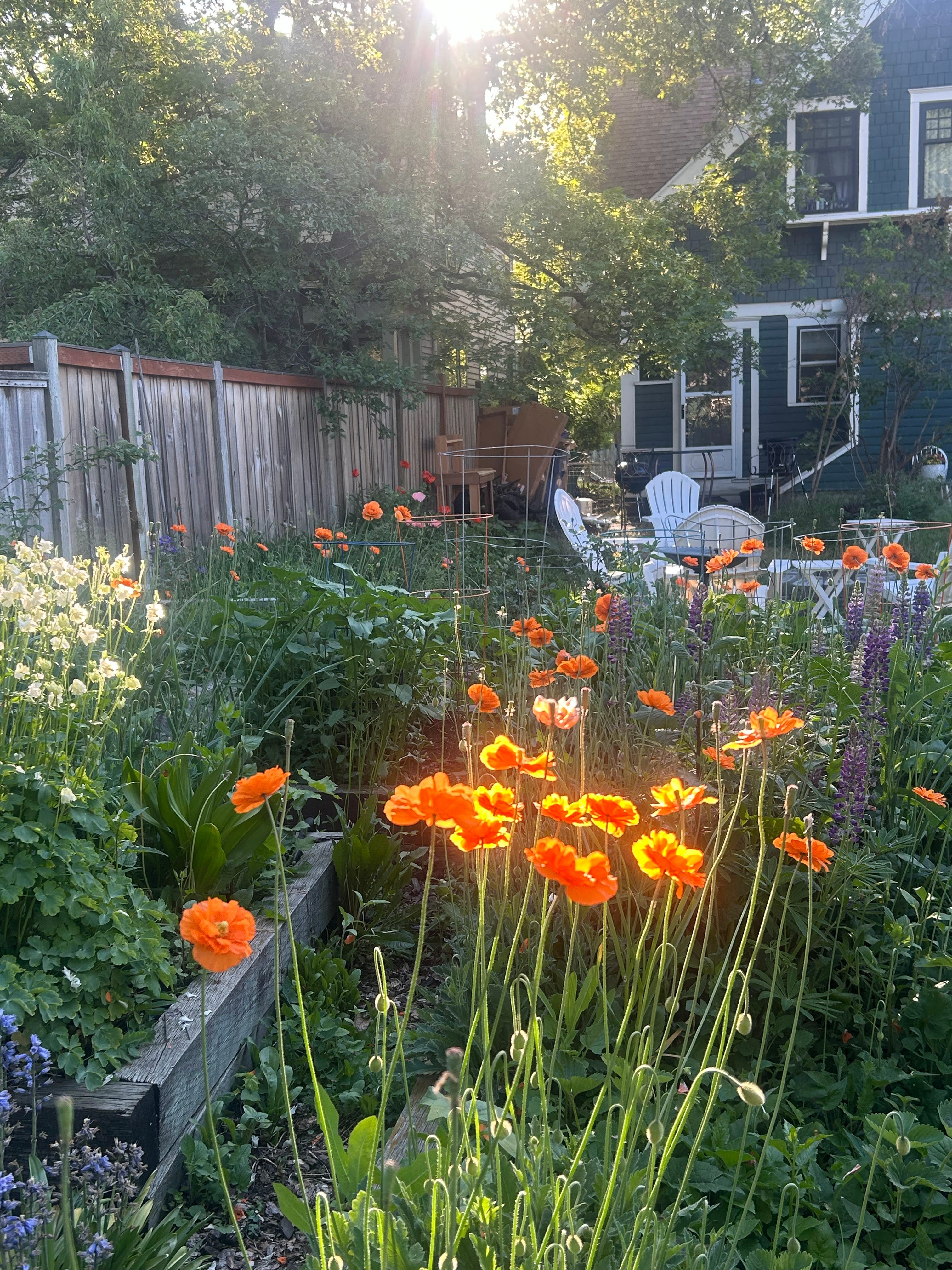
“Are those invasive, Mama?” Mateo asks pointing at the poppies. We are in the back garden. I am taking my daily noticing walk. Mateo is following me around showing off his new vocabulary. I notice the poppies too. You can’t not notice them. They are stunning, wild and whimsical, and in May, they are everywhere.
Poppies are generous and free. They self-feed, which in my garden means they have established themselves in most of the raised beds and have even found their way into the front yard. California poppies are quick to spread. If one neighbor has them, other neighbors will likely get them too. Isn’t it comforting to know that beauty is contagious?
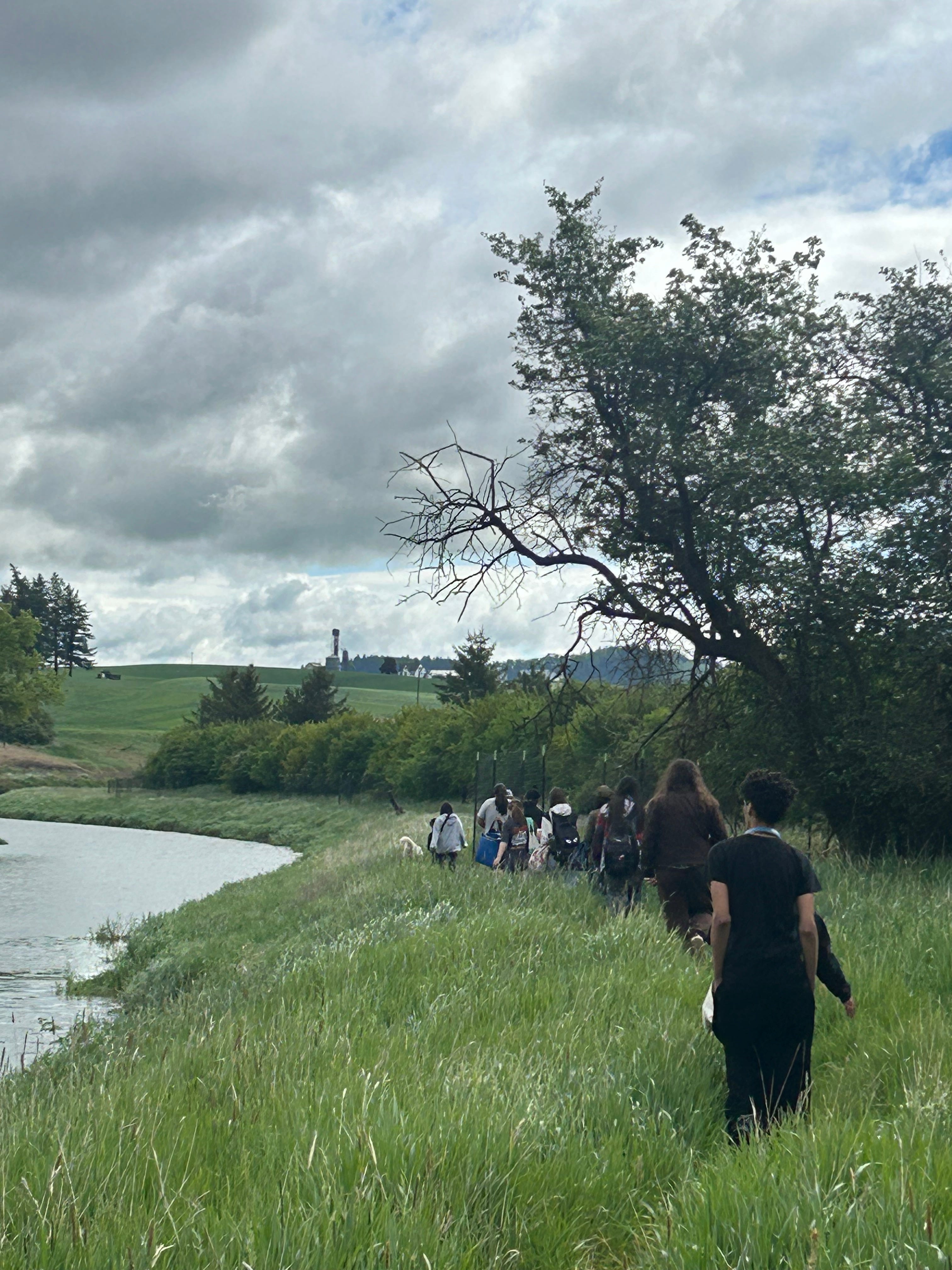
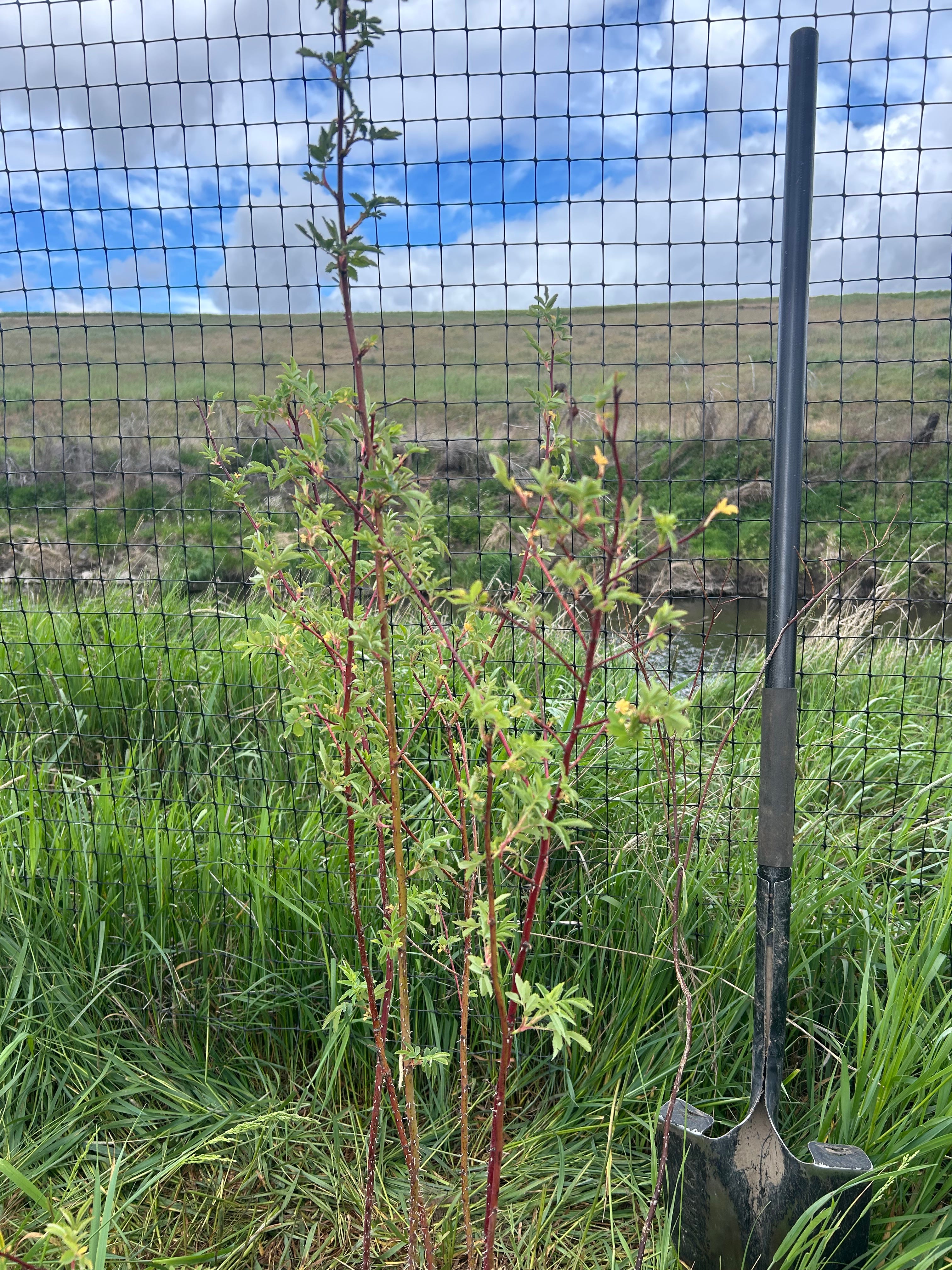
Recently, I took my students on a field trip where we planted trees along Hangman’s Creek with the Land’s Council, an organization whose mission is “to preserve and revitalize Inland Northwest forests, water, and wildlife through advocacy, education, effective action, and community engagement.” The days I took students to plant were practically perfect for me because all the things I love aligned. Yes, my feet slipped in the creek bed while I was filling up buckets with water to feed the wild roses, yes, my students told me that it was not looking good from behind, and yes, my socks and self-respect might never recover, but my soul never felt better. I was doing work I believed in alongside my students. We were together outside under a blue sky, and the sun was shining.
My life and passions are not always so balanced. Sometimes, one thing tends to take over, just like the poppies.
I knew that planting trees with my juniors and seniors would be amazing, and it was. One of my students even snuck away at lunch to use the pickaxe to make it easier for the rest of us to plant more trees in the afternoon. I wasn’t sure how the trip would go with sixty sixth graders. I had never taken kids on a field trip before where there wasn’t an accessible bathroom. One student asked what would happen if they needed to go number two, and Kat, our land’s council liaison and fearless leader, replied, “Well, you do have a shovel.”
As part of this unit, my sixth graders wrote research papers about water and trees. One of my students chose to write about invasive trees. The problem with invasive trees is that “they do little...to support the surrounding biome, stealing all nutrients from the soil, and leaving the plants nearby without nutrients to grow.” I learned from his paper that in Anchorage, Alaska, the government actually pays people a hundred dollars per tree to remove the invasive chokecherry tree. The chokecherry trees are lovely, but they take up space that would otherwise be inhabited by native trees which are beneficial to the local ecosystem. The chokecherries offer no such benefit.
There doesn’t seem to be a definitive conclusion on whether California poppies are invasive in my neck of the woods. I googled it, but the results were inconclusive. I also googled whether I could replant the poppies if I removed them. I accidentally typed puppy instead of poppy, and this was the AI generated response I got, “No, living animals cannot be replanted.” And we wonder what we did before AI?
Another one of my 6th graders wrote his paper on the threat that AI poses to our water supply. The amount of water needed to cool AI technology is astronomical, and the benefits seem inconclusive at best. His paper inspired me to google how to turn off AI when using google. As I did so, I thought of Audre Lorde; “The master’s tools can never dismantle the master’s house.” I did learn that you can add -ai at the end of your search, and it will filter the ai out. I don’t know if this reduces the carbon footprint, but it feels less complicit. Maybe if more of us do it, it will send a message that we don’t want AI answers. Interestingly enough, typing fuck ai at the end of your search works too.
Can poppies and strawberries co-exist? I’m starting to realize I don’t need someone else to answer that question for me. Unlike Alaska’s chokecherries, the poppies in my garden feed butterflies and bees. They are not without their benefits, but their roots extend deep into the soil, and they are soaking up all of the sun. If I want red strawberries, I need to let go of some orange poppies.
Along Hangman’s Creek, Kat tells students to make sure they can fit a full shovel between their saplings.
If we want something to grow, we need to give it space.
I’ve made a decision to teach part-time next year. I will still teach the same classes, Kat and I are already planning next year’s field trip, but I’m letting go of my coaching role. I’m not going to teach other teachers next year unless they register for my adult creative writing classes. Like the poppies, I’m placing this incredible work that I’ve gotten to do for a decade in the compost. I don’t do this lightly, but I’m learning that sometimes this is what you need to do in order to make more room for something else.
I’m a little scared, but the strawberries and trees are good teachers. I want to see what happens when I give my writing more soil and sun.
I’m giving myself some strawberry space.
P.S.
* My brilliant daughter coined the phrase strawberry space.
* I don’t think I actually have California poppies in my garden. I think they are Moroccan.
*If you are worried about my poppies, don’t be. I still have loads to spare. I’m letting them stay in other parts of the garden as long as they respect some boundaries.
I would love to continue this conversation in the comments. What resonates for you today? What are you letting go of and leaving space for? What’s going on in your garden? Read on if you want to know more about what’s happening in mine.
This Week in the Garden
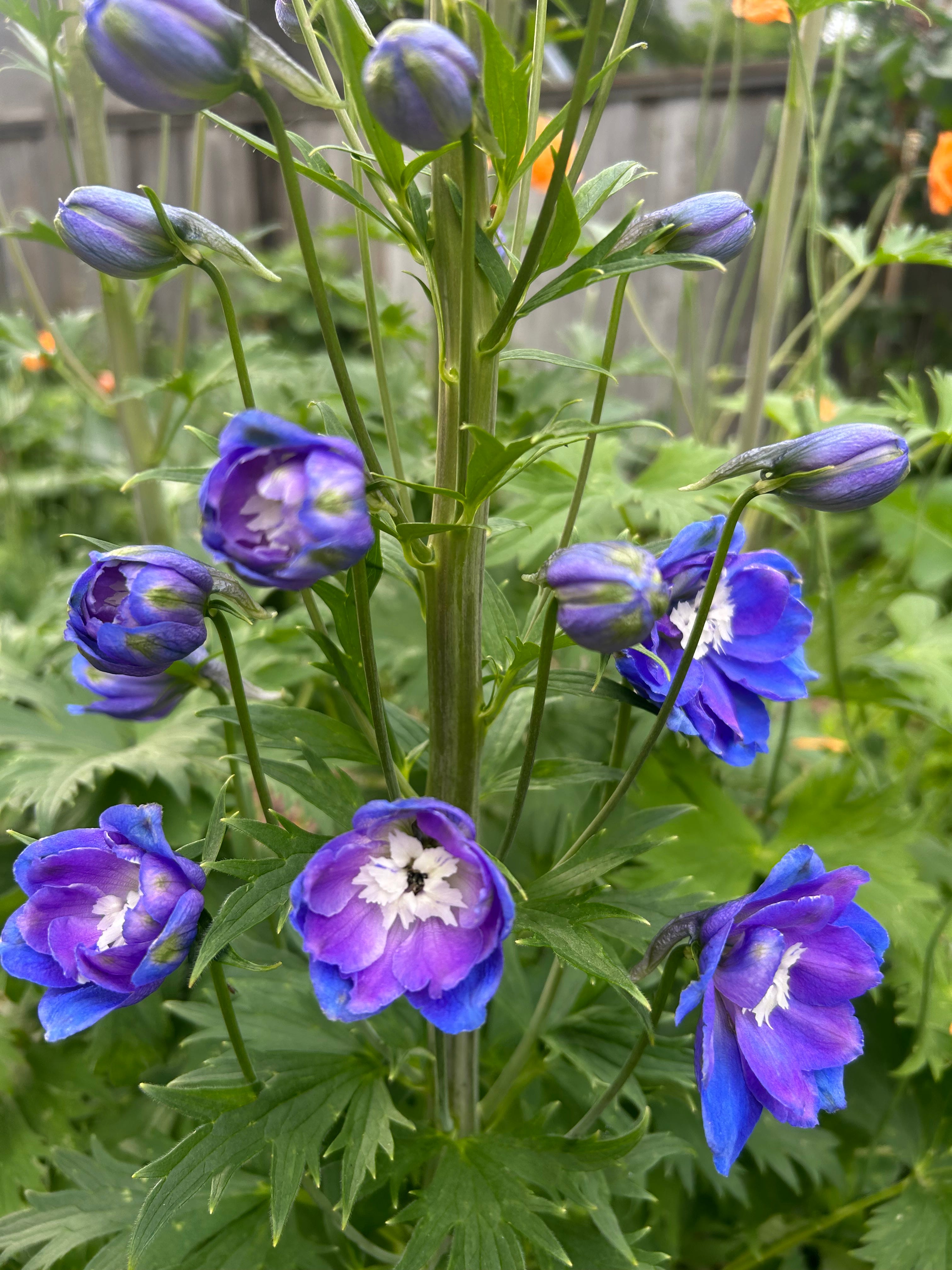
A lot of this week has been reflecting on what’s working and what’s not. Some things are taking off like the sunflowers, the snow and snap peas, the garlic and the delphinium. I think I might have a state fair delphinium on my hands.
Other things are slow to start. All the things I started indoors, save the tomatoes, are not looking amazing. I’ve become impatient. The growing season is only so long here in Spokane, and soon it will get hot. Today, I bought a few starts of some of the things I love from the farmer’s market, two basil and one Thai basil, which was actually two plants growing in one small pot. These starts will go a long way. Tonight, we will use the Thai basil in a stir fry along with the snow and snap peas we harvested. I will enjoy tending to these herbs while my seedlings slowly take their time.
I planted some mesclun this year for the first time, and it is a winner. It is still producing large greens. On the other hand, the arugula I planted bolted before doing anything. My kale in the back garden is slowly starting to take off. A few Swiss chard seedlings are emerging, which is unimpressive since I tried planting these seeds twice. I think Monty the Squirrel is messing with them. The carrots I have in the back garden are not doing much. I’m not sure the space they are in is a great location. I did some research though, and it might just be that I have to wait a little longer for them to produce. The potato, on the other hand, that I just popped in the ground because it grew eyes on my kitchen counter, is flourishing. I have no idea how to tell when it is ready to harvest.
I planted some hot pepper starts in the same bed as my sunflowers. I am not sure that was a good idea. I don’t have the heart to take out any more plants, so I’m going to wait and see how this co-habitation works out.
Four of my six dahlias sprouted and are now in the garden. One dahlia which I accidentally left in the ground last year came up as well, which I love. Next year, I will use the same planting method I did this year, because for the most part it seems to have worked, but I will get my dahlias from somewhere that will give me a refund if they don’t sprout.
Mateo and I weeded out the front garden. It’s amazing how much better it looks now. My drought tolerant native garden is looking pretty good. I know there are some things that I planted over the years that have not survived. I am getting better about realizing just how much care and attention things need when they are newly planted. This week I put a black-eyed Susan and some blanket flowers out there. I’m keeping a close eye on them.
There is space near the driveway that is empty where I decided to transplant some lavender from another part of my garden. It was challenging to find some roots, but I did, and it was enjoyable work because I got to smell lavender the whole time. I don’t think one can ever have enough lavender in their garden.
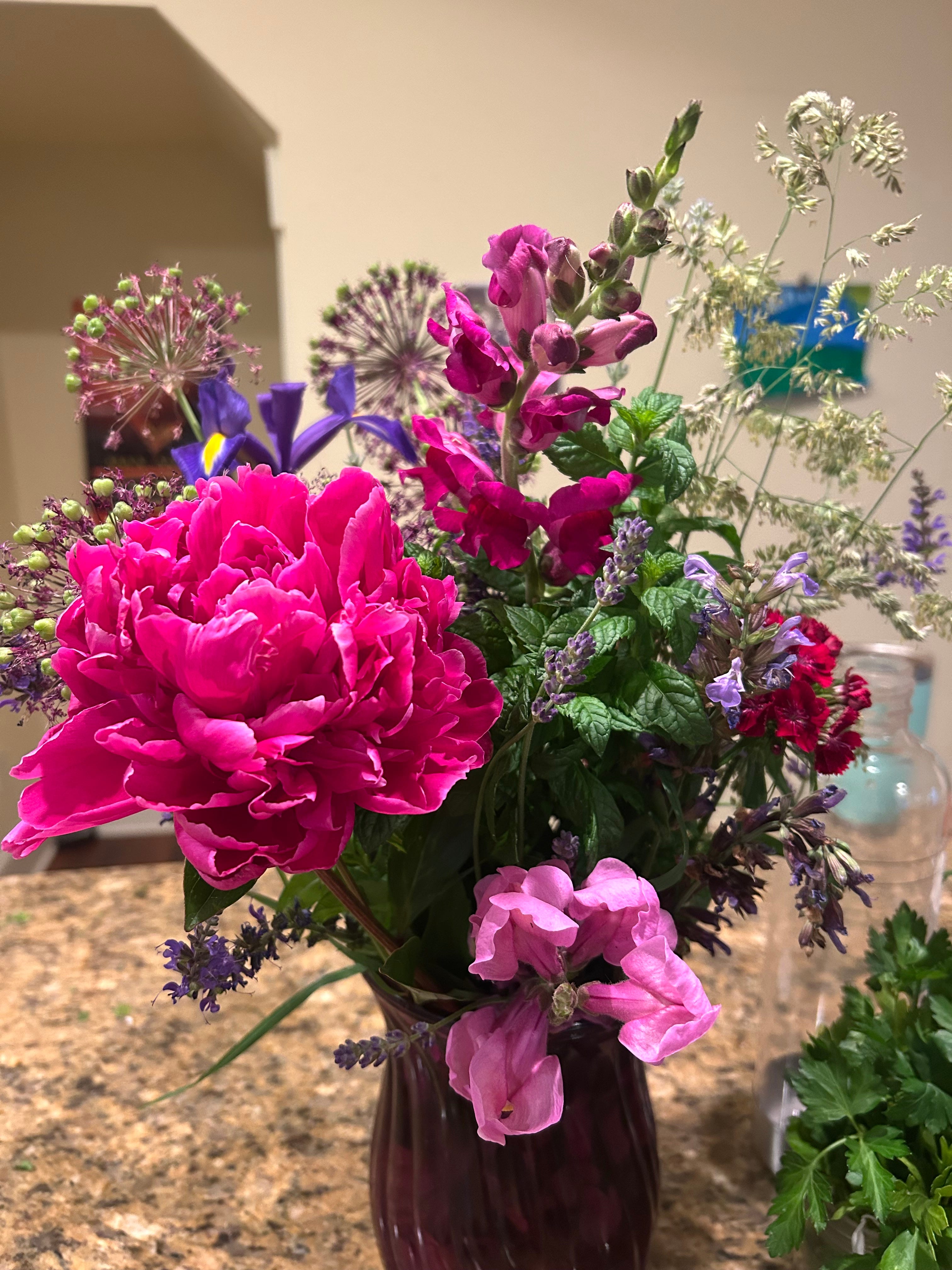
I have so many lovely flowers, more this year than ever. I’ve been making bouquets and sharing them with friends. I’ve been doing the same with my rhubarb jam. I have a recipe I love, which I’m linking here. It is super simple and doesn’t require canning. I think I may have left the lemon in a little too long in the last batch, but my friends tell me it was delicious.
This one really resonates with me.
I have poppies from a neighbors garden too. I tried moving some to make space for my tomatoes. They seemed unhappy but settled in.
The volunteers that I can't seem to say no to in my garden, the ones the bullied out the things I actually planted are arugula and cilantro — I wrote about that last summer (https://sarabarrywrites.substack.com/p/in-the-weeds)
Not sure what I'm composting in life right now, but I remember the year Marie Kondo's book was big, I applied "Does this spark joy" to things I was doing and weeded out a lot. (Was not so much of a fan of her thoughts on books.)
Mary,
I inherited some rhubarb from a gal at work and I had high, high hopes! What actually happened was I cooked it into a compote(I believe) and we ate it straight until it was gone. Probably took two days. I used to have poppies at my house on the west side and I LOVED how independent they were. I wish I lived near someone who had them so they could migrate to my house.
Tess